The Fish Bowl
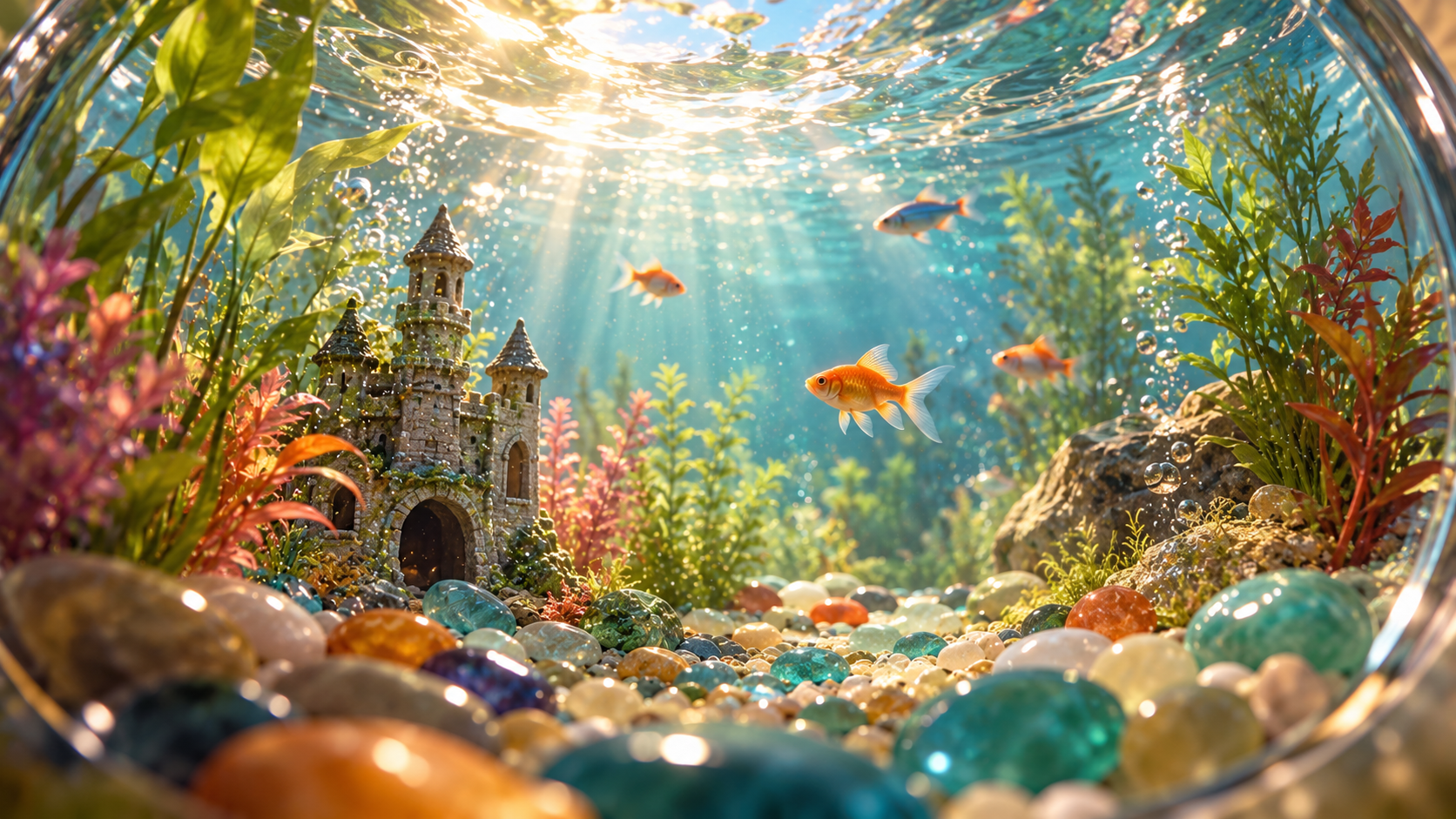
Discover a peaceful underwater sanctuary where every breath brings feelings of calm and comfort
Imagine. Breathe. Delight.
Ready to explore?
Press play below.
Background music:
Monumental Journey by Jesse Gallagher
Important Disclaimers: This complimentary guided self-hypnosis recording is intended for relaxation and personal well-being. It is not a substitute for professional medical or mental health care. As always, please save this experience for a time when you are safely away from driving and other activities that require your full attention.
A note about this experience: This guided visualization includes the imaginative experience of being underwater and breathing comfortably within that imagined environment. If you have concerns or uncomfortable memories associated with water, you may wish to listen to the recording while fully alert before deciding whether to participate.

The Neuroscience of Imagination: Why the Brain Loves Make-Believe
When was the last time you allowed yourself to imagine something completely impossible?
Perhaps you imagined floating effortlessly through the clouds, walking through an enchanted forest, or breathing comfortably beneath the surface of the ocean.
As children, we often enter imaginary worlds without hesitation. A cardboard box becomes a spaceship. A blanket becomes a castle. A backyard becomes an unexplored wilderness.
And for a little while, these imaginary experiences can feel wonderfully real.
As adults, we sometimes spend less time engaging in this kind of playful imagination. Yet our brains retain the remarkable ability to create vivid internal experiences, complete with sights, sounds, sensations, and emotions.
And neuroscience offers some fascinating insights into why imagination can be such a meaningful part of our emotional lives.
Your Brain Is an Extraordinary Storyteller
Every moment of your waking life, your brain is interpreting information from the world around you.
It combines incoming sensory signals with memories, expectations, and previous experiences to create your perception of the present moment.
But here's something remarkable: your brain can also construct experiences without receiving all that information from the outside world.
Close your eyes for a moment and imagine holding a warm cup of coffee.
Perhaps you can picture the color of the cup, imagine the comforting warmth against your palms, or almost smell the rich aroma rising from its surface.
There may be no coffee anywhere nearby, yet your mind can create a surprisingly detailed experience.
Researchers have found that mental imagery engages some of the same brain networks involved in actual perception, although imagining an experience and physically experiencing it are not identical processes.
When you picture a familiar place, imagine a sound, or recall a comforting sensation, your brain draws upon stored information to help construct that internal experience.
In a sense, your imagination allows you to explore possibilities without physically going anywhere.
And those possibilities can carry genuine emotional meaning.
Why Imaginary Experiences Can Create Real Feelings
Have you ever felt nervous while watching a suspenseful movie, even though you knew you were sitting safely in your living room?
Or felt a sudden warmth of affection while remembering someone you love?
These experiences illustrate something important about the relationship between imagination and emotion.
Our emotional responses are influenced by more than the immediate physical environment. Memories, expectations, stories, and imagined situations can also contribute to how we feel.
Brain regions involved in emotional processing interact with systems responsible for memory, attention, and mental imagery.
This helps explain why imagining a peaceful setting can sometimes encourage feelings of comfort, while imagining an exciting adventure might bring a sense of anticipation or delight.
In guided self-hypnosis, we intentionally direct our attention toward an imagined experience.
Rather than simply thinking about a peaceful place, we begin to imagine what it might feel like to be there.
We might notice the temperature, the light, the sounds, or the sensations surrounding our bodies.
The more personally meaningful and engaging the imagery becomes, the easier it may be to experience the emotions associated with it.
The imagined world remains imaginary.
But the feelings we experience while exploring it can be very real.
The Power of Absorption
Have you ever become so immersed in a good book that you temporarily lost track of the room around you?
Perhaps you've experienced something similar while listening to music, watching a beautiful sunset, or becoming deeply involved in a creative project.
Psychologists sometimes describe this quality of focused engagement as absorption.
Absorption involves becoming deeply attentive to an experience, whether that experience comes from the outside world or from within our imagination.
It is also relevant to hypnosis.
During a guided hypnotic experience, attention can become increasingly focused on the words, images, and sensations being suggested.
As that focus deepens, other thoughts and distractions may become less prominent.
This doesn't require losing awareness or surrendering control. Hypnosis can involve an active, imaginative participation in the experience.
In The Fish Bowl, the listener is invited to imagine sitting comfortably inside a large glass bowl.
Then comes an unexpected discovery.
The bowl is filled with water, and within this imaginary world, breathing underwater feels completely natural.
Of course, human lungs cannot breathe water in ordinary physical reality. But imagination allows us to explore an experience beyond the usual rules of the physical world.
For a few moments, we can participate in the story simply by wondering what that impossible experience might feel like.
And that willingness to imagine opens the door to something delightful.
When Imagination Meets the Body
The relationship between imagination and the body is especially interesting.
When we imagine physical sensations, the brain may engage networks involved in sensory processing, movement planning, and bodily awareness.
For example, mentally rehearsing a movement can activate some of the neural systems involved in preparing or performing that movement, although the patterns of activity differ from actually moving.
Similarly, imagining warmth, floating, or gentle physical support may influence our subjective experience of the body.
In The Fish Bowl, the listener imagines being surrounded by warm, comfortable water.
The arms feel buoyant. The body feels supported. Breathing becomes associated with the words Peace and Calm.
These suggestions invite the mind to connect imagined sensations with feelings of relaxation.
The water becomes a symbol of comfort and ease.
And with each imagined breath, the listener has another opportunity to focus on those feelings.
This is one of the beautiful possibilities of guided imagery: we can use the imagination to create an internal environment that supports the emotional experience we wish to cultivate.
Rediscovering Wonder and Delight
Relaxation is often described as becoming quiet, still, and peaceful.
And those experiences can be deeply valuable.
But our emotional well-being also includes moments of curiosity, playfulness, wonder, and joy.
Positive emotions have been studied for their potential roles in flexible thinking, social connection, and psychological resilience.
Psychologist Barbara Fredrickson's broaden-and-build theory, for example, proposes that positive emotions can temporarily broaden our attention and the range of thoughts and actions we consider, potentially helping us develop useful personal resources over time.
This doesn't mean that every pleasant experience produces lasting changes, or that we should feel happy all the time.
Rather, it offers an interesting perspective on why moments of delight can be meaningful in their own right.
Consider what happens near the end of The Fish Bowl.
The water slowly disappears, and the listener discovers that the glass bowl has transformed into an enormous soap bubble.
Sunlight creates beautiful rainbow colors across its surface.
And then, unexpectedly, the bubble pops.
The experience shifts from peaceful stillness into a moment of surprise, playfulness, and joy.
It's a lovely reminder that relaxation and delight can exist together.
We can feel calm and curious. Peaceful and playful. Grounded and full of wonder.
Sometimes the most delightful journeys happen when we close our eyes and give our imagination permission to play.
Giving Yourself Permission to Imagine
Perhaps one of the most valuable aspects of imagination is that it offers us a space to explore.
We can picture unfamiliar places, experience new perspectives, and experiment with feelings and possibilities.
We can imagine ourselves resting comfortably, moving with confidence, or simply enjoying a moment of uncomplicated happiness.
And we can do all of this while remaining safely seated in an ordinary room.
Guided self-hypnosis offers one way to engage this remarkable human capacity with intention.
Through focused attention, sensory imagery, and gentle suggestions, we create opportunities to experience the mind and body in new ways.
Sometimes those experiences are deeply peaceful.
Sometimes they are unexpectedly joyful.
And sometimes, they remind us of something we understood instinctively as children: imagination is a wonderful place to visit.
There is still room in your life for wonder. There is still room for play. And there is always room for a little peaceful delight.
“Within your imagination, entire worlds are waiting to be discovered. And sometimes, the most beautiful discoveries are the feelings of peace, wonder, and joy that have been within you all along.”
Katherine Long, CMS-CHt
Clinical Hypnotherapist | CHT OKC
Looking for more guided self hypnosis experiences?
Visit the Guided Self Hypnosis page.